Now accepting new patients for hearing loss treatment! Call us today at (207) 664-2123 to learn more about how we can help!


(207)664-2123
Now accepting new patients in two locations to better serve you!
Ellsworth area residents:
Please call 207-664-2123 to schedule your visit at our main office at 306 Main Street in Ellsworth.
Dover-Foxcroft area residents:
Please call 207-902-8898 to schedule your visit at the RSU Building, 572 Bangor Road in Dover-Foxcroft.
Our Comprehensive Audiologic Assessment
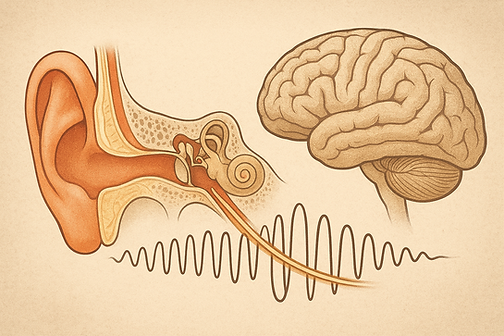
Our Doctors will go beyond a traditional hearing test and evaluate the mechanical functionality of your ear anatomy, your hearing sensitivity at each ear, your ability to hear speech in background noise environments and your auditory processing performance. Because of the relationship between aging, increasing hearing loss, decreasing balance ability and declining cognitive health, our doctors will also perform screenings of your general balance ability and cognitive health.
History and Risk Factors
Your visit begins with a review of your audiologic history and medical history with your doctor. Your hearing ability is as unique as you are. Everyone has a different medical history, noise exposure history and family history of hearing loss. Obtaining a thorough history is essential in managing and treating any hearing issue. We will also ask you to provide a current medications list, so we can identify any medications or supplements that may negatively impact your hearing and balance health.

Otoscopy
Your audiologist will use an otoscope to inspect your outer ear, ear canal and eardrum for any abnormalities, such as excessive earwax build-up. While we can provide earwax removal for most patients, we still encourage you to visit your primary care physician to have any earwax removed just before your visit.
Immittance Testing
Your audiologist will perform special testing to check the function and health of your eardrum, middle ear bones and muscles, and screen for possible central nervous system problems. This is done by inserting a probe into your ear canal. You will feel a slight change in pressure and listen to different beeps at various pitches and volume levels.


Pure Tone Threshold Testing
This is the most familiar part of our assessment protocol. Your audiologist will have you wear headphones and listen to beeps across different frequencies of sound. You will be asked to push a button when you think you hear the beeps. This test helps to map out your hearing ability for the frequencies that are most responsible for hearing speech information.
Speech Recognition Testing
Your audiologist will then have you listen to recorded sentences under headphones. The sentences are presented at levels equivalent to average conversational speech. You will be asked to repeat back what you hear. This assessment tests your ability to hear speech accurately in quiet environments, without distractions.
Speech In Noise Testing
Speech In Noise testing has been nicknamed the “stress test” of the brain. This test gives your audiologist a measurable score to determine how well you can understand words clearly in the presence of competing background noise. You will be asked to wear headphones and listen to sentences administered to each ear. Each sentence will be presented with increasing levels of background conversation. You will be asked to repeat back as much of each target sentence as you can understand.


Tinnitus Assessment
If you have complaints of tinnitus (i.e., ringing in the ears or other sounds), your audiologist will perform special diagnostic testing to help identify the pitch and volume level of the tinnitus at the ear. Additional testing will be done to determine what level of masking stimulus is necessary to provide relief from the tinnitus. These results can be helpful in determining appropriate treatment for your tinnitus symptoms.
Balance Screening
The inner ear is responsible for both hearing and balance. With aging, both hearing and balance can be at risk. Because of this relationship, your audiologist may have you do a balance screening to check your balance ability. Depending upon your screening results and reports of dizziness symptoms or reduced balance ability in your case history, appropriate recommendations for follow-up diagnostic assessment will be made by your audiologist.


Cognitive Screening
Cognitive screening is an important component of an audiological evaluation because hearing loss can significantly impact cognitive function, and conversely, cognitive decline can affect a person's ability to process auditory information effectively. By screening your cognitive performance, we can better distinguish between difficulties caused by hearing impairment and those related to potential cognitive deficits, allowing for more accurate diagnosis and personalized intervention strategies. Early identification of cognitive changes also enables timely referrals to appropriate healthcare providers, supports effective communication strategies, and enhances patient outcomes by addressing both auditory and cognitive needs concurrently.
Results Review and Recommendations
After your assessments, your audiologist will sit down with you and review the findings. Your audiologist will make recommendations for preventative care and management of the hearing loss that is identified. Your audiologist may also recommend additional diagnostic testing or encourage referrals to other healthcare providers. If hearing aids are recommended to treat hearing loss, your audiologist will help you determine the next steps as a part of your personalized treatment plan.
Each component of our Ear-to-Brain Hearing Assessment is essential to provide your audiologist with the overall picture of your ear and hearing health. It is not encouraged that patients opt out of any necessary component, unless directed by your audiologist at the time of your assessment.
